Mushroom Island Backgrounds: Crafting Whimsical Book Covers
The Visual Language of Enchantment
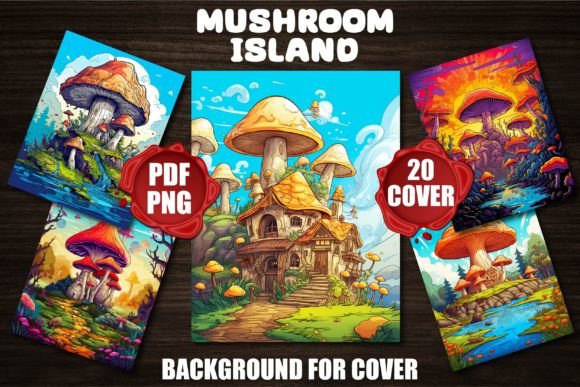
There's a particular quality to Mushroom Island backgrounds that goes beyond simple illustration. They don't just depict a scene; they establish a mood. Imagine towering, bioluminescent fungi casting a soft glow on moss-covered stones, or tiny, intricate ecosystems thriving in the nooks of a giant, spotted cap. The color palettes often lean into deep teals, warm ambers, and soft lavenders, creating a sense of twilight magic. This isn't a photorealistic forest; it's a fantasy realm, rendered with a painterly touch that feels both detailed and dreamlike. The personality is inherently whimsical, mysterious, and inviting. It speaks to stories of adventure, hidden worlds, and gentle magic, making it a powerful creative font—or in this case, a creative asset—for any designer looking to instantly convey a sense of wonder.
For a book cover designer, this style is a goldmine. The visual hierarchy is built-in. A central, grand mushroom can serve as the perfect backdrop for a title, its cap acting as a natural frame. The intricate details of smaller flora and fauna in the foreground can guide the eye, creating depth without visual clutter. This inherent structure influences readability and brand perception immediately. A fantasy novel wrapped in this background promises a certain kind of journey—one that's immersive and visually rich. It's a far more engaging design asset than a generic gradient or a simple photograph, setting the stage for a cohesive brand identity from the very first glance.
Practical Applications Beyond the Bookshelf
While the primary use case is clear, the versatility of these Mushroom Island Backgrounds for Cover projects extends much further. Think like a brand strategist for a moment. A boutique tea company specializing in herbal blends could use these backgrounds for packaging, evoking a sense of natural, mystical ingredients. A children's educational app about ecosystems or a fantasy-themed planner for adults could use these as digital paper or section dividers, creating a consistent and immersive user experience. The style translates beautifully to social media graphics for authors, game studios, or lifestyle brands that want to cultivate an aesthetic of mindful escapism.
- Publishing & Editorial Design: Ideal for fantasy, young adult, children's book, and cozy mystery covers. Also perfect for chapter headers, endpapers, and interior illustrations.
- Digital & Print Products: Excellent for journal and planner backgrounds, digital sticker sheets, printable wall art, and website hero images for creative businesses.
- Branding & Marketing: Use for packaging design for artisan goods, event invitations for themed parties, or as a textured backdrop for product photography to add a layer of story.
- Personal Projects: Perfect for creating unique gifts, custom party decorations, or as a background for personal digital scrapbooking and creative expression.
The key is to match the asset's personality with your project's goals. These backgrounds are not for minimalist tech startups or corporate financial reports. Their strength lies in projects that value artistic relaxation, storytelling, and a touch of the extraordinary. When evaluating fit, ask: does my project benefit from a sense of wonder, detail, and natural magic? If yes, this collection is a powerful tool.
Integrating the Asset: A Designer's Workflow
Getting the most out of a bundle like this requires a bit of strategy. First, don't treat it as a monolithic set. With 20 distinct high-quality coloring backgrounds and scenes, you have a library of moods. One background might be perfect for a serene, contemplative journal cover, while another with more dramatic lighting and vibrant fungi could be the star of an adventurous fantasy novel. Review the included styles and categorize them internally: serene, adventurous, mysterious, playful.
Next, consider font pairing. This is where the background's style directly influences your typographic choices. The organic, flowing lines of the Mushroom Island scenes pair beautifully with certain typefaces:
- With Serif Fonts: A classic serif font with moderate contrast, like a transitional or old-style serif, can add a layer of timeless elegance. It grounds the whimsy, making it suitable for literary fantasy or historical fiction with magical elements.
- With Sans Serif Fonts: A clean, geometric sans serif font can create a striking modern contrast. This works well for contemporary fantasy, magical realism, or for brands that want a fresh, clean take on the theme.
- With Script or Handwritten Fonts: A flowing script font or a careful handwritten font can enhance the personal, storybook quality. This is ideal for children's books, personal blogs, or products emphasizing handcrafted appeal. Use these sparingly for titles to maintain legibility.
Always test your pairings. Place your chosen text over the background at full size. Check readability at a thumbnail scale—this is how most people will first see your book cover online. Ensure the text has enough contrast. Sometimes, a subtle drop shadow or a very soft, dark vignette around the edges of the background can make light-colored text pop without obscuring the beautiful artwork.
Finally, understand the nature of the asset. These are AI-generated images, which means they offer a unique blend of detail and consistency that can be hard to achieve manually. However, as with any digital print or graphic design resource, it's wise to review the licensing for commercial use, especially for large-scale print runs or merchandise. The bundle format, offering a massive bundle design of 20 files, provides excellent value for a small business owner or publisher who needs multiple options for different projects or series.
In the end, Mushroom Island Backgrounds for Cover are more than just pretty pictures. They are premium design assets that carry a strong visual narrative. Used thoughtfully, they can elevate a project from ordinary to unforgettable, building audience engagement through a shared sense of wonder and creative expression. They are a toolkit for telling stories that begin before the first page is turned.